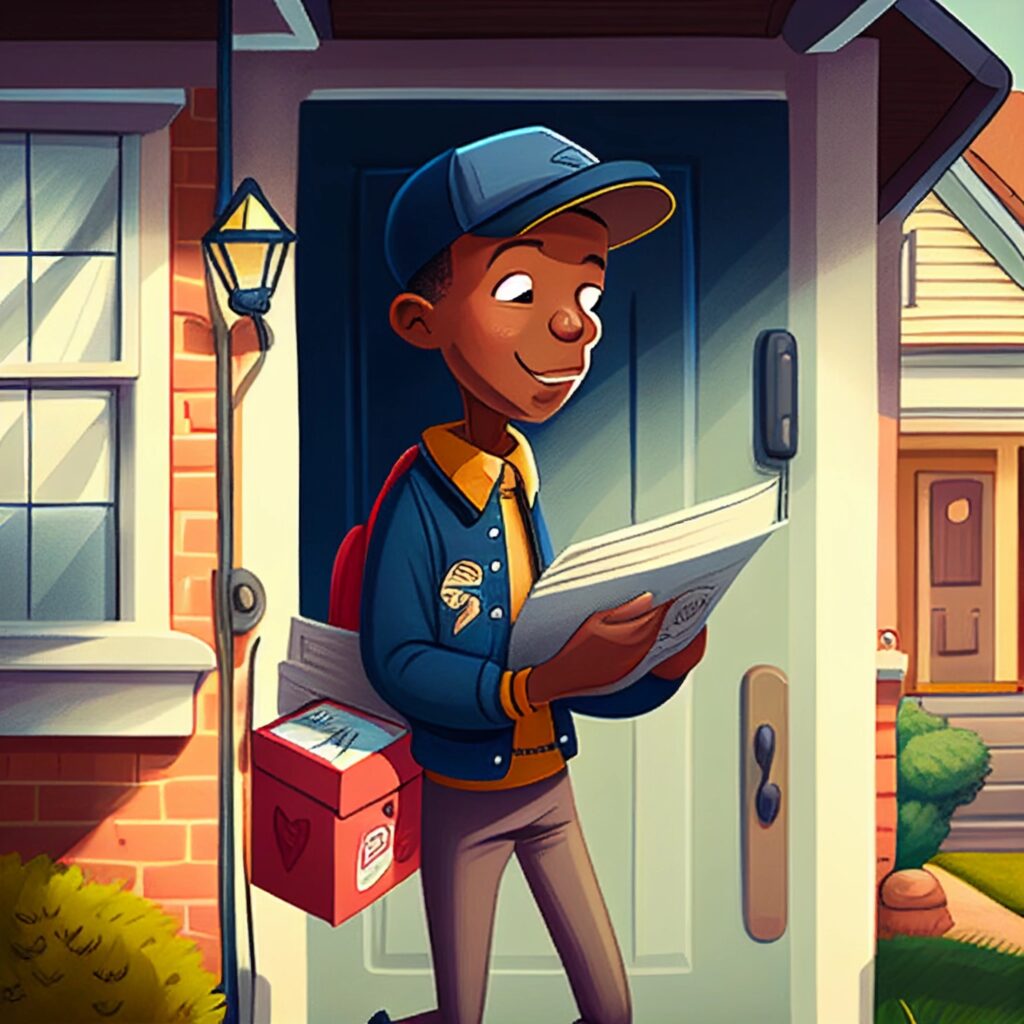
In the year 2100, the world was not what it used to be. The nuclear wars of 2020 had left the planet a barren wasteland, with limited resources and a shortened life expectancy. Jack, a young boy of only 12, was one of the few survivors living in this harsh new world. He lived with his mother, the only family he had left. His father had died before he was born, killed by raiders while out gathering food for his family. With his mother suffering from a severe case of the flu, it was up to Jack to fend for them both.
Every day, Jack used the family car, an inheritance from his father, to transport farmers from their farmlands to the mainlands, where the few remaining residential areas were located. On one of these trips, he came across a man in a colorful jester costume, advertising magic marbles that could produce clean water. Water was a luxury in this new world, and most people were willing to pay exorbitant prices to get their hands on it. When Jack heard that these marbles could produce water, he saw an opportunity to make a fortune. He quietly approached the man and asked how much it would cost to acquire the marbles. The man replied, “These marbles have no monetary value. They are only worth as much as your most valued possession.”
Without hesitation, Jack offered the family car in exchange for the marbles. The man accepted, and Jack rushed home with his new treasure. He was too scared to take the marbles out for fear of raiders, so he decided to test them out in the safety of his own home.
He placed the marbles on the ground, and a bright white light enveloped the room. Jack pushed his mother out of the way, and the light blinded him. When the light faded, he found himself in a high-tech facility with titanium walls. There was no one in sight, but displayed before him was the largest all-you-can-eat buffet he had ever seen.
Overwhelmed by the sight of so much food, Jack started wrapping it up in the tablecloth. But before he could finish, an alarm sounded, and a hoard of people burst into the room. All human and looking normal, they saw Jack and their expression changed. They turned into an angry mob and lunged for him.
Jack immediately jumped into the beam of light again, and he appeared back in front of his mother, the food safely tucked under his arm. He had escaped unscathed, but he knew he couldn’t stay in one place for long. He was now a wanted man, with a valuable possession that many would kill for.
The magic marbles, it turned out, were created by a secret faction of scientists who had managed to survive the nuclear war and had been living in luxury underground. They had developed the marbles as a means of teleportation, allowing them to move around the world freely and secretly. They saw Jack as a thief and a threat to their existence and were determined to retrieve the marbles and eliminate him.
Jack knew he had to leave the mainlands and head to the farmlands where he could hide and maybe even find a new way to survive. He set off on a journey through the barren wasteland, learning how to scavenge for food and defend himself against raiders. As he traveled, he met other survivors like himself, each with their own story of loss and survival.
He soon realized that the post-apocalyptic world was divided into different factions, each with their own agenda and way of life. Some, like the scientists, had access to resources and technology that allowed them to live in relative comfort. Others, like the farmers, had to struggle to eke out a living in the harsh conditions.
As Jack navigated this dangerous world, he encountered many challenges and obstacles. He had to fight off raiders and bandits, avoid the scientists and their henchmen, and find a way to sustain his mother’s health. But through it all, he never gave up hope. He was determined to survive, and to find a way to make a better life for himself and his mother.
During his journey, Jack also discovered that the marbles could be used for more than just teleportation. He found out that they could produce clean water and he used this to help the farmers and the survivors. He became known as the “Marble Man” and he was respected and admired by the people.
He eventually found a safe place to live, a small community of survivors who welcomed him and his mother with open arms. They taught him how to farm, how to build and how to defend themselves. And with the help of the marbles, they were able to establish a sustainable community.
Years passed and Jack grew up to be a strong and resourceful leader. He led his community to thrive in the new world and helped other communities to do the same. He found a way to live in harmony with the other factions and even formed an alliance with the scientists. Together, they were able to bring about a new era of peace and prosperity in the post-apocalyptic world. Jack’s determination, resourcefulness and compassion helped to shape a new world where the value of life was respected and the people worked together to survive and thrive. And he continued to use the magic marbles to help others, and they became a symbol of hope in a world that had been ravaged by war.
Pursuing a career in the entertainment industry can be challenging, but it is also incredibly rewarding. Many people may be tempted to give up on their dreams and settle for a more traditional 9-5 job, but this could be a mistake. The entertainment industry is not only a way to express oneself but it also offers the opportunity to inspire others and make a real impact on the world.
One of the biggest reasons to never give up on a dream of pursuing a life in entertainment goes behind the potential for success. Yes, actor and comedian Steve Carell worked as a mail carrier for nearly a decade before he landed his first acting gig on The Dana Carvey Show. And since then, he has become one of the most recognizable faces in Hollywood, with a successful career in both television and film.
The you have Oprah Winfrey, who started her career as a local news anchor before becoming a talk show host and media mogul. Her story is a testament to the fact that it’s not only about the final product but also about the journey and the ability to inspire others to pursue their dreams.
Did you know that Pharrell was a mailman before he became a successful musician, record producer and fashion designer. He is a living proof that pursuing a career in the creative industry can bring incredible success and financial stability, as well as personal satisfaction.
It’s important to note that success in the creative industry is not always immediate and it can be a long and winding road. But the rewards of following your passion and creating something that is truly meaningful are immeasurable.
In conclusion, pursuing a career in the creative industry may be challenging, but it is also incredibly rewarding. These examples of celebrities who quit their 9-5 jobs to pursue something creative, serve as a reminder that success is possible if you never give up on your dreams. The creative industry is not only about the final product but also about the journey and the ability to inspire others to pursue their dreams. So, don’t quit your daydream, and chase after your creative aspirations.
As a creative, it can be all too easy to get caught up in the constant stream of opportunities that come our way. From new projects to collaborations, it can feel like saying “yes” to everything is the only way to stay relevant and ahead of the game. But, as we all know, saying “yes” to everything can lead to burnout, unfulfilled promises, and a lack of focus on our true passions. So, how do we navigate the fine line between saying “no” and fear of missing out (FOMO)?
First and foremost, it’s important to have a clear understanding of your priorities and goals. Before committing to any new opportunity, take a step back and evaluate if it aligns with your overall vision and mission. By having a clear understanding of what you want to achieve, it will be easier to say “no” to opportunities that don’t align with those goals.
Another important factor to consider is your capacity. As creatives, we often have a tendency to take on more than we can handle. It’s important to be realistic about the time, energy, and resources you have available and to not overextend yourself. Saying “no” to an opportunity may be difficult in the moment, but in the long run, it’s better to do a few things well than to spread yourself too thin and not deliver on your commitments.
It’s also crucial to remember that saying “no” to an opportunity doesn’t mean it’s gone forever. Sometimes, it’s just not the right time for a particular project or collaboration. Keep an open mind and don’t close the door on opportunities that may come back around in the future.
Finally, it’s important to embrace the power of “no”. Saying “no” to an opportunity doesn’t make you less of a creative or less ambitious. It’s about setting boundaries and protecting your time, energy, and creativity. It’s about being selective and intentional about the opportunities you take on, and making sure they align with your priorities and goals.
In short, the fine line between saying “no” and FOMO can be challenging to navigate, but by understanding your priorities and goals, being realistic about your capacity, keeping an open mind, and embracing the power of “no”, you can make strategic decisions about the opportunities you choose to pursue.
Strategies for Overcoming & Mastering the Mindset for Success
Creatives are known to be highly imaginative and intuitive, but their craft can also come with a heavy load of self-doubt and negative thoughts. The constant pressure to come up with new and innovative ideas can lead to feelings of inadequacy and frustration. But, just like any other profession, they can take steps to overcome these negative thoughts and unlock their full potential.
The first step in overcoming negative thoughts is to recognize and acknowledge them. It’s easy to get caught up in a spiral of self-doubt and criticism, but it’s important to remember that these thoughts are just that – thoughts. They don’t define who you are as a person or as a creative. By acknowledging them, you take away some of their power and can begin to take control of them.
Next, it’s important to challenge these negative thoughts. Often, the thoughts that hold us back are based on false assumptions or beliefs. Challenge these thoughts by asking yourself if they are true or not. Are you really not good enough? Is your work truly not worthy of recognition? Chances are, the answer is no. By challenging these thoughts and recognizing that they aren’t true, you can begin to let them go.
Another effective strategy is to practice mindfulness and focus on the present moment. When we’re caught up in negative thoughts, we’re often dwelling on the past or worrying about the future. Mindfulness allows us to be fully present in the moment and observe our thoughts without judgment. This can help us detach from them and see them for what they are, rather than getting caught up in them.
Additionally, it’s important to have a support system in place. Surround yourself with people who understand and support your creative endeavors. This can include friends, family, and other creatives in your field. They can provide valuable feedback and encouragement, and can help you maintain perspective when you’re feeling down.
One can also find inspiration in other forms of art and media. Inspiration can come from various sources and it’s important to keep an open mind. By exposing yourself to different art forms, you can gain new perspectives and be inspired to create something new and unique.
Finally, take time to celebrate your accomplishments and successes, no matter how small they may seem. It’s easy to get caught up in the negative thoughts and forget about the positive things that have happened. Recognize your achievements, and remind yourself that you have the capability to create something great.
In conclusion, negative thoughts are a common part of the creative process, but they don’t have to hold you back. By recognizing, challenging, practicing mindfulness, having a support system, finding inspiration, and celebrating your successes, you can overcome these thoughts and unlock your full potential as a creative. Remember to be patient with yourself and know that it’s a process. And most importantly, don’t be too hard on yourself, we all have moments of self-doubt, it’s all about how we choose to deal with it.
The Intense Physical and Mental Journey Behind His Role in ‘Magazine Dreams’
Jonathan Majors has been turning heads at Sundance with his portrayal of a toxic bodybuilding fanatic in Magazine Dreams. The actor has undergone an incredible transformation for the role of a toxic bodybuilding fanatic, with the camera often lingering on his impressive muscles throughout the film. Majors revealed the extraordinary dedication and incredible and sacrifices he made to become the character.
I’m 6 feet tall. I’m 202 pounds.” “In order to sustain that and to grow that you have to eat as much protein that you weigh. I ate 6,100 calories a day for about four months. That included the pre-work and the post-work of ‘Creed III’.” “The normal bodybuilder works out two times a day,” he said. “I’m playing Killian Maddox… Playing him you don’t fuck around. What ended up happening is I would train two hours, two times a day for the movie and a third time after wrap. Meanwhile, you eat six times a day. Lots of chicken. Lots of elk. That’s just for me. I like it.”
The actor went on to explain that his intense training regimen was a reflection of the character he was playing.
The normal bodybuilder works out two times a day,” he said. “I’m playing Killian Maddox… Playing him you don’t fuck around. What ended up happening is I would train two hours, two times a day for the movie and a third time after wrap. Meanwhile, you eat six times a day. Lots of chicken. Lots of elk. That’s just for me. I like it.”
Despite the intense physical demands of the role, Majors has no plans to slow down.
I played football in Texas. I got an appetite,” he said. “I really like being physical. I like hiking and running. I’ve got dogs. I’m only 33… I got to do something to stay with it. I don’t work out three times a day anymore. Just once a day.”
The actor’s dedication to the role was evident in the final product, with critics praising his performance as “transfixing” and “phenomenal”. Majors’ transformation was not just physical, but also mental, as he delved deep into the psyche of a character consumed by obsession and toxic masculinity. The film explores the destructive nature of such obsessions and the cost it can have on one’s mental and physical well-being.
A Raw and Unforgiving Exploration of Fury and Self-Destruction.
When a filmmaker sets out to captivate an audience and make a powerful statement, one tried and true method is to craft a pulse-pounding climax that combines the grit of Pulp Fiction with the glitz of Boogie Nights. In Magazine Dreams, writer-director Elijah Bynum delivers just that, with a scene that will leave audiences breathless.
The film follows the story of Killian Maddox, a bodybuilder portrayed by criminally talented Jonathan Majors, whose obsession with physical perfection and unbridled rage lead to a descent into self-destruction. Majors delivers a powerhouse performance as Killian, becoming a bodybuilder himself for the role, and imbuing the character with a vulnerability and intensity that is truly mesmerizing.
As Killian’s obsession with achieving the perfect physique takes over his life, he becomes increasingly isolated and violent, turning to steroids and consuming 6,000 calories a day in pursuit of his goal. But despite his rough exterior, there is a gentleness and thoughtfulness to Killian that makes it impossible not to root for him.
The film explores the destructive nature of obsession and the toxic masculinity that can accompany it, as Killian’s single-minded pursuit of the cover of a magazine like his idol Brad Vanderhorn (Michael O’Hearn) begins to unravel his life. It’s a raw and unflinching look at the dangers of fixating on an unattainable ideal, and the cost it can have on one’s mental and physical well-being.
Backed by a soundtrack that includes Patti Smith‘s rendition of Because the Night, Magazine Dreams is a film that will leave a lasting impression. Majors delivers a standout performance, it’s a must-watch for fans of powerful and thought-provoking cinema.
It’s easy to ignore those who are perceived as different or invisible, especially nowadays as society loves to label people and cast them aside, but sometimes those very labels only serve to make certain individuals shine brighter. Little Richard, born Richard Wayne Penniman, was one of those individuals. He was a force to be reckoned with, and no matter how society tried to mark him, he demanded to be seen.
In her new documentary, Little Richard: I Am Everything, director Lisa Cortés shines a spotlight on the legendary musician whose complex legacy is woven into the fabric of American popular music. The film is a powerful reminder that even when society tries to bury certain individuals, their impact and influence can never truly be erased.
The film begins with Little Richard in all his bedazzled glory, with his signature pancake makeup and conked hair, pounding away at the piano. But Cortés quickly takes the audience back to the beginning, to Little Richard’s childhood in Macon, Georgia. Born into a family of 12 siblings, Little Richard’s early life was a series of contradictions. His father was a strict minister who owned a nightclub and was also a bootlegger. Though Christianity was a constant in his life, Little Richard was exposed to different forms of worship through his mother’s quiet Baptist church and his father’s vibrant A.M.E. church.
Cortés uses a wealth of archival footage, interviews, and anecdotes from family, friends, and scholars to take the audience on a journey through Little Richard’s life. It was a life full of twists and turns, but one that never stopped moving forward, even if the direction changed. The music and performances in the film are breathtaking, but Cortés also anchors the audience with history. As Little Richard was bringing Black and white teens together at concerts for the first time, Emmett Till was brutally murdered in Mississippi. Little Richard’s Blackness and queerness made him a symbol and a target, and the film explores the rampant appropriation and near-obliteration of his legacy by his imitators, like Elvis Presley, The Beatles, and The Rolling Stones.
But despite the struggles he faced, Little Richard never stopped advocating to be seen for exactly who he was and for all of the brilliance he contributed.
Little Richard: I Am Everything premiered on January 19, 2023 at the Sundance Film Festival, and it’s a must-watch for anyone interested in the history of American music and the fight for visibility and representation.
The fashion industry is buzzing with the latest trend of 3D-printed design, and Paris is at the forefront of this movement. On January 20, BOTTER and Reebok unveiled a wild 3D-printed sneaker, and later that day, Dior showcased its fully 3D-printed Derby shoe as part of its FW23 presentation. Dior has previously experimented with 3D-printed wearables, but this is the first time the French house has attempted to create a one-piece 3D-printed shoe.
The 3D-printed Derby shoe boasts a futuristic design, resembling the midsole of an adidas 4DFWD. It comes in black colorways, with subtle Dior branding at the heel and underfoot, and a quicklace toggle fastening. The shoe is lightweight and has a more formal silhouette, making it approachable for even the most devoted sneakerheads.
This latest trend in 3D-printed footwear begs the question: is this the future of shoes? Brands like Givenchy and Zellerfeld are pushing for the technology to go mainstream, but smaller brands may not have access to the same level of quality construction. As the production of 3D-printed footwear becomes more accessible for designers, it’s easy to imagine more shoes being shaped by computers. Dior’s FW23 shoes are a testament to this seemingly inevitable future.
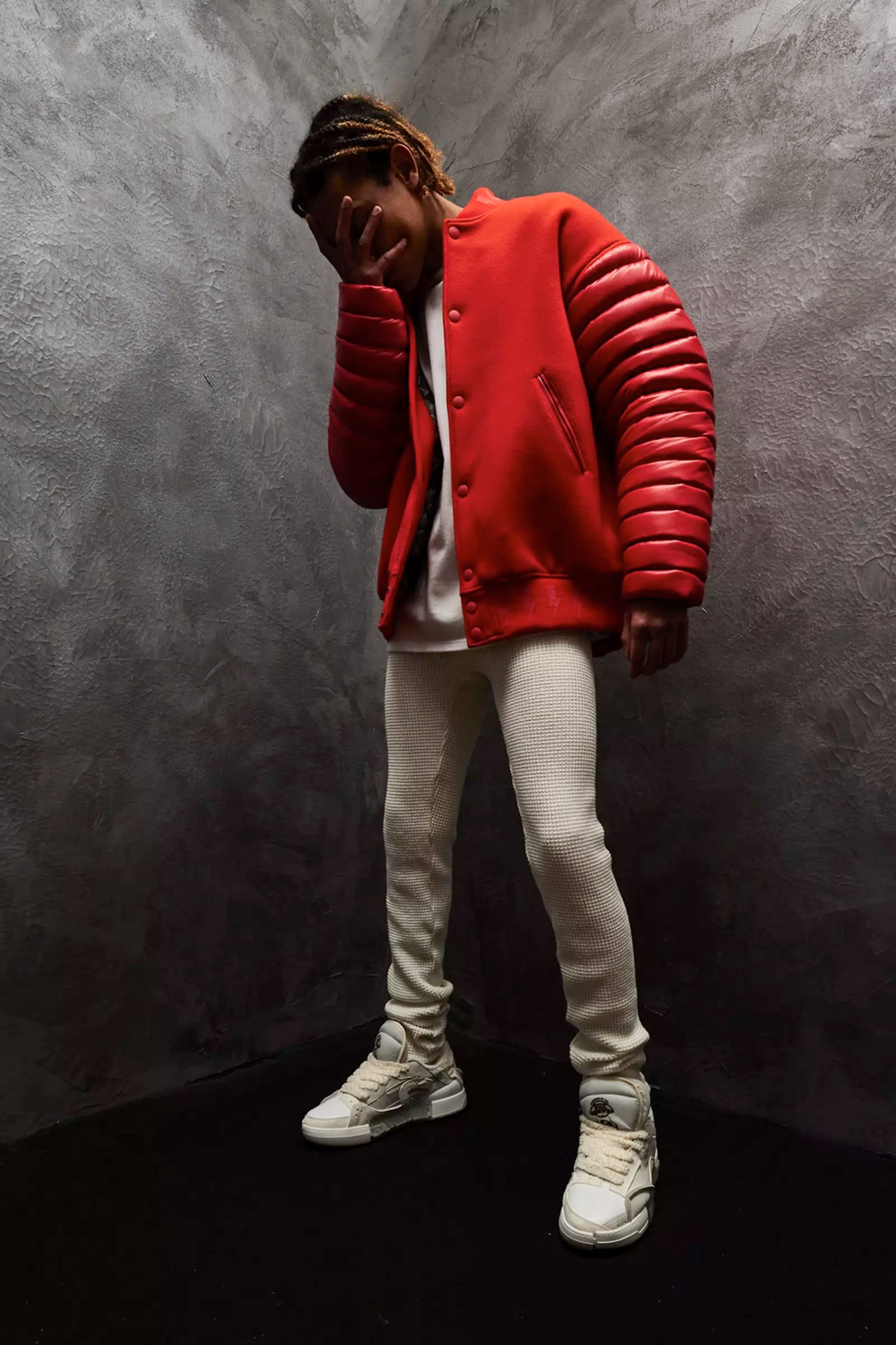
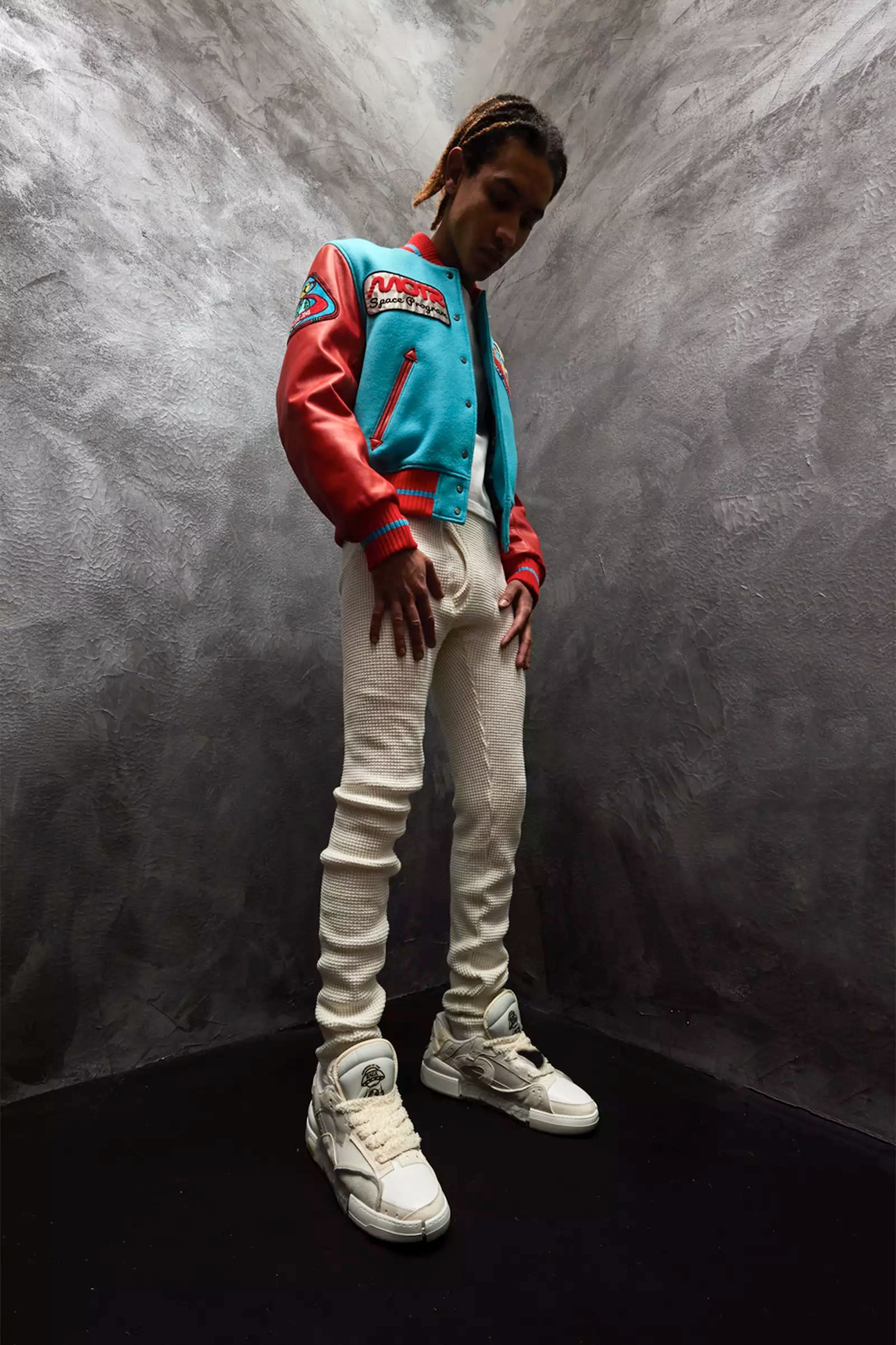
It’s finally here, OKAY! Kid Cudi‘s Member of the Rage (MOTR for short) clothing line was unveiled in full at Paris Fashion Week and let me tell you, it’s lit. The designs are straight fire and exactly what you’d expect from Cudi – flashy, trendy, and dripping with his personal style. A showroom was set up for guests to touch and try on the new high-end line, and it’s clear that Cudi put a lot of thought and effort into this collection. Although, the brand hasn’t really given us much information beyond a dead website and a vague Instagram bio, this debut collection speaks for itself.
Cudi announced that he was working on MOTR back in 2021 and confirmed that it would be launching in 2023. So, this Fall/Winter 2023 collection probably won’t be released until Summer 2023, but he might drop a few pieces early to keep us on our toes. Fingers crossed!
Finally startin my own clothing line. Been a long time comin and another dream of mine. More madness, true vision, freshness comin soon!!!
This collection definitely lives up to MOTR’s mission statement, but it’s also heavily influenced by Cudi’s own personal taste. It’s a co-ed collection, with references to stuff he has been spotted wearing in the past few years. You’ll see his ERL wedding dress, BAPE-inspired camo, and even a Midnight Studios-like boombox bag. Teddy fleece, baggy jeans, and spaceman vibes are all over the place.
MOTR also includes accessories, like this bespoke sneaker. Be prepared to drop some cash on this collection because Cudi is positioning MOTR as a luxury label. But trust me, it’s worth it. Stay tuned for more surprises leading up to MOTR’s official debut by the end of the year.
Man, so much. My clothing line, directing my first movie that im starring in from a script I wrote, couple movies coming out, a lil tv, Im seriously the most hyped about it all 🙌🏾 https://t.co/yQchCE5SkD
Chris Cardillo is a man of many ventures. From running Castle Windows, a successful home improvement business, to being heavily involved in the entertainment industry as a music artist, film producer, and managing partner in the rebranded Coleco.
In this exclusive #CPTRD interview, Cardillo delves into the world of entertainment and his creative process, sharing insights on how he balances multiple projects, the hardest part of developing other artists, and how Blue Curacao is his favorite music project to date.
Cardillo’s passion for the creative process shines through as he speaks candidly about his journey and the importance of having a strong team. He provides a unique perspective on the entertainment industry.
This interview is a must-read for anyone interested in the creative process, the entertainment industry and the journey of an entrepreneur.
Sam Morrison: You have Castle Windows, but what in the entertainment industry do you find the most fulfilling: music, film, or the rebranding of Coleco?
Chris Cardillo: Wow, I love all these things, so that is a very hard question to answer. If we are setting the window business aside and speaking of entertainment only, I would say that the most fulfillment I get is during the creative process. Film captures that essence the most.; completing a scene you know that you’ve effectively transferred an emotion and delivered the scene in a believable way, gives you chills.
SM:How do you decide which venture you’ll be devoting your time to?
Chris: My energy is focused on the home improvement business where I have an obligation to my clients. For those that have worked on projects with me know, I will work long intense periods of time at the home improvement company. Once things are set in motion on a sustainable level, I can switch gears and focus on a project from time to time. Projects like movies usually have a defined beginning and end.
I’ve found that I can work on a project intermittently for up to two weeks before engaging in an intensive work session. I can work on the budgeting and project management and line production in the evenings while typically I try to complete most of my creative physical work during Castle’s off-season. However, the real ‘Wizard behind the curtain’, is that I have a tremendous support staff both on my creative projects and at my company. It takes an army of people to create a movie or even an album. I’ve been able to surround myself with other people who have a vested interest in shared creativity. Without that support staff, projects would not be finished.
SM: Would you consider yourself a serial hobbyist or an entrepreneur?
Chris: When it comes to collecting toys and games, I am strictly a serial hobbyist. Music, Coleco, and film are on the entrepreneur side of things with well thought out business plans and anticipated returns.
SM: Correct me if I’m wrong, but I believe I’ve been involved in the making of all your albums, but your last project, Blue Curacao, is where you took things to the next level, from the music to the album cover and music videos. You would say Blue Curacao is your favorite music project as a whole?
I would say so. I think that it is the project in which I became a true artist – a project where I deeply connected with the music and lyrics and developed the project from the heart. I definitely took my time with each song and pushed myself to do things in the booth that I didn’t know that I was capable of doing. I spent a good bit of time working alongside song writers to capture the essence of each song. With songs that have meaning, the visuals (videos) come naturally.
SM: Will you be putting out another album or will you relaunch your record label Jersey Mint and develop other artists?
Chris: Albums usually start with a spark of a new idea for a song. I will lay down a few songs to experiment with different sounds and styles. After a number of attempts, something will just sound like a direction that we want to go in and then a project is born. I’m not opposed to jump starting Jersey Mint, but it would look more like an umbrella entertainment company than a record label.
SM: What is the most challenging aspect of developing other artists as compared to releasing your own music?
Chris: Marketing Direction.For the most part, I give very liberal reins with creative control in the music itself. I’ve been to a number of meetings where the label wanted to ‘package’ me. The best artists deliver a product that they have a passion about. So, I never wanted to box an artist in. When it comes to marketing, promotion and performing, I feel as though that’s where the team should take over. I have been in a number of projects where there is a difference in understanding on what is needed from the artist at that point.
SM: I’m sure you get bombarded with music and film investment queries, myself included, so from a financing perspective, do you have a criteria on how you decide what projects to get involved with?
Chris: Yes, quite a bit. I haven’t ever taken on an unsolicited movie project. In order for me to work with someone on a project, I have to know them and have seen them physically work on a prior project. Deciding to take on a film is an enormous undertaking, and it’s hard enough to complete a project when everyone starts off on the same page. I have to see your work ethic and know that you are committed to completing the project.
SM: We be collaborated on the feature film Second Chance City in last year where you made your debut as a director. What made you zero in on this project for a directorial debut?
Chris: Man, where do I begin. For starters, the script is a masterpiece and has already won ‘Best Screenplay” in the Los Angeles Independent Film Festival. I have always wanted to be involved with a movie that was a social drama or socially relevant. I felt as though I could empathize with the characters. Initially, I wanted to audition for one of the leads, but felt as though the story would be told better with a different actor. This is a story that I want to tell and I trust myself in the ability to draw out the emotions and feelings that I had when first reading the script.
SM: You’re also a huge toy collector, can you walk us through your collection?
Chris: I am what’s called a ‘completist’ by nature. I attempt to collect the entire checklist of items in its given series. My favorite toy to collect is G.I. JOE. I am the only person to ever collect a complete run of the line graded. This is every figure graded and sealed in its original package, every vehicle and play-set in its original package and every card variation thereof. G.I. JOE is a significantly large toy line and this was roughly 800 – 900 pieces.
Currently I have 3 Graded USS Flagg Aircraft carriers with 1 unit waiting to be graded and 3 Defiant Space Craft and 1 unit waiting to be graded. My last sealed acquisition of a Defiant was the original unit given to the designer which was featured in the TV show, Toys that Made Us. When I picked up the toy, I was able to interview the designer and I hope to release that interview soon.
Unfortunately, the majority of my collection sits in temperature controlled storage units. Collections like this take up a LOT of space. I hope that one day I can pick up a nice sized building to display everything. I, along with James DeSimone, am co-author of Collecting and Completing your GIJOE figures. This is considered the bible of Joe collecting. Copies are still sold daily throughout the world and this is one of the best selling projects I have been a part of.
I was the first to publish a visual collector’s guide of collecting sealed or boxed Nintendo (NES) games. I completed this project with Tim Atwood who is a legend in game collecting. There have been tons of books dedicated to Nintendo games that are very nice, but ours was the very first. Needless to say, I collect sealed and loose video games from Nintendo, Atrari and ColecoVison. I collect the ColecoVision consoles both sealed and loose.
I collect a number of lines including Air Raiders, Robotech, Legion of Power, and the list goes on. I collect production animation cels that were used in the making of such cartoons. I began collecting PSA graded baseball and football cards around 2008. Right now, I am into the restaurant retro – I guess since there is no existing name for what I am doing. I recently acquired a complete McDonald’s playground set from the 1980s and I have been collecting vintage pizza hut pieces. I’m also hunting large vintage playground pieces. Right now I am trying to locate a playground piece called a ‘Moon House’ designed by Jim Miller-Melburg.
SM: What aspect of your collection is likely to generate the most skeptical reactions from others??
Chris: I actually feel as though I have great support from the people around me. Somehow I avoid the label of a toy nerd. However, if there is one thing that people question it would be ‘army building.’ I may have literally thousands of one figure. Multiples are not that odd of a concept with action figures, but I will randomly zero in on say five items in a line. I extend this to other areas of collecting. Maybe I buy every Zelda NES game that I come across. I do the same thing with graded sports cards.
SM: Did your passion for collecting lead you to become involved with Coleco, or was it purely a financial investment opportunity??
Chris: Coleco was based on a financial investment. I’ve written articles on the life cycle of retro collectibles and I knew that 80s retro would make a strong comeback at the time. I was able to enter the market at the exact right time.
SM: What is the current status of Coleco? There were previous discussions about the Chameleon but it never came to fruition, what is planned for the future?
Chris: We are busy making licensing agreements. Not a week goes by that someone wants to work on some project or another. Since the termination of the Chameleon contract, we have resurrected the mini arcades and that project has been subsequently picked up by Arcade 1 Up. We held our own Coleco Expo. We were able to work with a Canadian company who created an FPGA based console where Coleco would guarantee the short runs on their system in exchange for a private label. Thus far, we have delivered on everything that we have promised. I do have a punch list of what is to come next but I’m holding it close to my vest this time. Since the first Toy Fair, I have seen a number of my personal ideas on the toy shelves by companies that I directly spoke to and I refuse to make that mistake a second time.
SM: Coleco is a brand from the 80s that has a dedicated fanbase. How do you cater to both the retro brand loyalists and the next-generation consumers? Or is that a strategy you are pursuing?
Chris: Retro is in and I think that it is here to stay. In order to bridge the gap, we have to market our product to adults who remember our brand with the goal of having them share those products and technology with their own children. Our Blue Ocean strategy with the Expo was to cater to families as opposed to the same ‘old-guy’ retro market that most companies were targeting at the time. I personally demand that all of our products are family friendly or as I like to describe them Disneyesque.
SM: In our previous conversation, we discussed the launch of Coleco Entertainment, a venture that would involve creating films and television shows based on intellectual properties from comic books, video games, and toys. Will Coleco Entertainment see the light of day?
Chris: This would be something that you may see as a licensing agreement. We are currently having talks with three different content creators on this matter. I am sure that you will see something, but I definitely cannot speak on it at this time. I will tell you; however, we are working with Mariano Nicieza and APEX to bring fans a new Colecovision comic line that includes comics based on Cosmic Avenger, Venture and Pepper II.
SM: What would be the first Coleco IP you would adapt into a film?
Chris: Actually, I would like to adapt the company itself, or the resurrection of it. There have been a number of scripts that have been written where one of the characters works as chairman of Coleco. I have had one script idea called Joe White, where Joe White is a trust fund baby who must work on a project in order to gain his inheritance. He has seven workers who brainstorm on resurrecting an old retro line that happens to be a Colecovision. Of course, each of the seven workers has a different personality: one of them is sleepy, one of them is grumpy and so forth.
SM: Who emerges victorious? J. Fontaine the music artist, Chris Cardillo the filmmaker, the toy and gaming entrepreneur or do you find a way to wrangle in the time and continue with all these ventures?
Chris: Much to the dismay of my publicist, I don’t view myself as three people, but three dimensional. I try to follow my own team’s advice on how to differentiate the three. Although, from my own perspective, I am just doing what comes naturally to me. When people ask me what I do, I have a hard time with that question. People often confuse ‘who they are’ with ‘what they do for a living’.
In terms of success, I would say that the entrepreneur thus far has been victorious, and that would only change if a movie or project suddenly gained some world wide attention or cult following But even if that were to happen, I would be pulling up to my same office Monday morning ready to work on some home improvement contract. In short, much like the Breakfast Club ending, you see me how you see me.
It’s clear that Chris Cardillo is attempting to be a creative force in the entertainment industry. With his ability to balance multiple projects as well as his insights on the importance of passion, support, and marketing direction in the entertainment industry are valuable for anyone looking to make a career in the field. His journey is a testament to the fact that with hard work, dedication, and a strong support system, anything is possible. It’s exciting to see what’s next for Chris Cardillo and his ventures in the entertainment industry.